You don’t need a forty-page business plan to build a real business.
You don’t need projections, mission statements, or a vision board that looks like it came from a corporate retreat.
But you do need something.
An approach. A direction. A framework that tells you what to build, who to build it for, and how to actually get it in front of people.
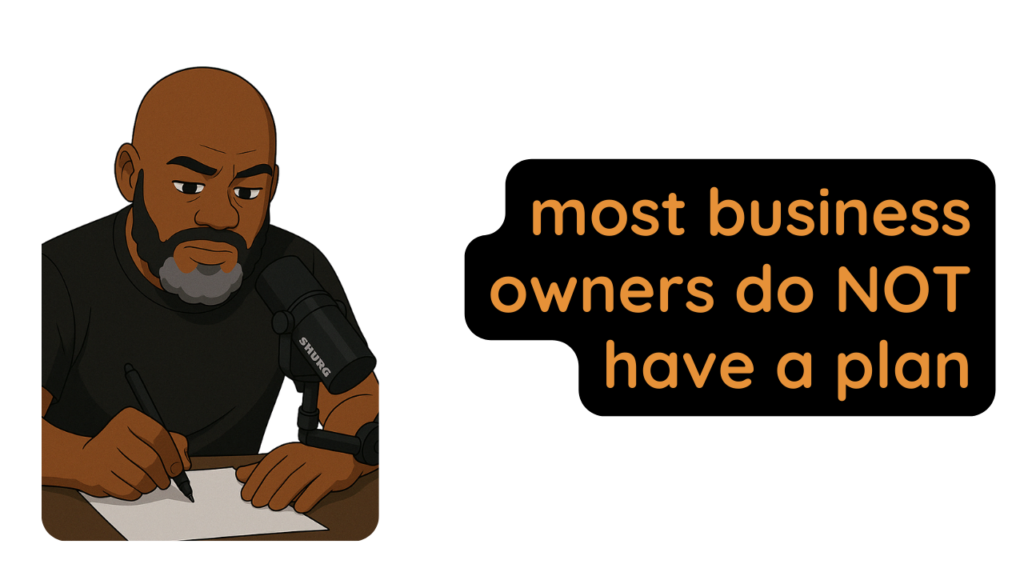
And here’s the uncomfortable truth: most people don’t even have that.
They’re operating on vibes, reacting to whatever crosses their feed, chasing tactics without context, and wondering why nothing sticks.
But even more interesting? Of the small percentage who do have a plan, most still don’t execute.
Let’s talk about why.
The Gap Between Intention and Action
I’ve worked with hundreds of business owners, consultants, and creators over the years. Smart people. Capable people. People with real expertise and legitimate value to offer.
And I’ve noticed something consistent.
When I ask, “What’s your approach to growing this business?” most give me one of three answers:
Answer one: A vague statement about consistency. “I’m just going to keep posting and see what happens.”
Answer two: A list of tactics they heard on a podcast. “I’m going to launch a lead magnet, start a newsletter, maybe do some webinars, and eventually build a course.”
Answer three: Silence. Followed by, “I haven’t really thought about it like that.”
None of these are plans.
They’re hopes. Reactions. Good intentions without architecture.
And without architecture, you’re just guessing.
What a Real Approach Actually Looks Like
An approach doesn’t need to be complicated.
It needs to answer a few simple questions: Who are you serving? What problem are you solving for them? How will they find you? What will you offer them? How will you deliver it? What happens after they buy?
That’s it.
You don’t need spreadsheets. You don’t need a deck. You just need clarity on the path from stranger to customer, and the systems that make that path repeatable.
But clarity requires thinking. And thinking requires stopping long enough to actually map out what you’re building instead of just doing things.
Most people skip this step entirely.
They jump straight into execution mode, posting content, running ads, launching offers, without ever defining the structure those tactics are supposed to serve.
And when nothing works, they assume they need better tactics.
They don’t. They need a better foundation.
The Execution Problem
Now, let’s say you’re in the minority. You’ve actually taken time to think through your approach. You know your audience, your offer, your path to revenue.
Congratulations. You’re already ahead of 80% of people.
But now comes the harder part: actually doing it.
Because here’s what I’ve seen happen more times than I can count.
Someone builds a plan. A real one. They map out their content strategy, their funnel, their launch calendar. They know exactly what needs to happen and when.
And then… life happens.
The algorithm changes. Motivation dips. A project at work demands attention. The kids get sick. A week becomes a month. The plan sits in a Google Doc, untouched, while they go back to posting randomly and hoping something breaks through.
Execution isn’t about motivation. It’s about systems.
It’s about building in accountability, simplicity, and constraints that make it easier to do the work than to avoid it.
Most plans fail not because they’re bad plans, but because they require perfect conditions to execute. And perfect conditions don’t exist.
What Separates the People Who Actually Build Something
The people I’ve seen succeed—the ones who go from idea to income, from chaos to clarity, from random posts to real revenue—share a few things in common.
They have a plan, yes. But more importantly, they have a simple plan. One that doesn’t require them to be everywhere, do everything, or maintain unsustainable levels of output.
They don’t rely on motivation. They rely on structure. Repeatable actions. Systems that don’t collapse the moment energy dips.
They don’t chase every new tactic. They commit to a focused approach and give it enough time to actually work.
And they don’t operate in isolation. They have some form of accountability, whether that’s a coach, a community, or just a weekly check-in with themselves that forces honest evaluation.
The gap between intention and execution isn’t talent. It’s not luck. It’s structure.
So Where Do You Start?
If you don’t have a plan, start there. Not a fifty-page document. Just clarity on the basics. Who you serve, what you offer, how they find you, what happens next.
If you have a plan but aren’t executing, the problem isn’t the plan. It’s the system around it. Ask yourself: what would make this easier to do consistently? What’s in the way? What can I remove, simplify, or automate?
And if you’re stuck somewhere between knowing what to do and actually doing it, you’re not alone. That’s the space most people live in.
The way out isn’t more information. It’s better structure.
Systems beat motivation. Clarity beats hustle. And a simple plan you execute beats a perfect plan you don’t.
Build something repeatable. Then do it.
If you’re ready to stop guessing and start building with structure, explore AmplifiedOS or join the community. No hype. Just frameworks that work.